Garden fencing helps define outdoor spaces, add privacy, and protect gardens from wind and unwanted access. In many West Sussex homes, fences also improve the overall look of the property while creating clear boundaries around lawns, patios, and planting areas.
Over time, fences naturally wear out. Strong winds, rain, soil moisture, and ageing can weaken timber panels or shift posts. When damage appears, homeowners often wonder whether the fence should be repaired or replaced.
Understanding the difference between repair and replacement can help reduce unnecessary costs while keeping the garden secure and visually consistent with other outdoor features like gardening design and patios. This guide explains when fence repair is enough and when replacement may be the better option.
Why Garden Fences Are Important for West Sussex Homes
Garden fences are more than simple boundary markers. They contribute to the overall usability and design of outdoor spaces.
Many homeowners planning garden design in West Sussex projects consider fencing as a structural element that frames the landscape. A well-installed fence complements lawns, planting beds, patios, and pathways.
Fences can support several functions:
- Privacy for gardens and patios
Fences create a visual barrier between neighbouring properties, allowing homeowners to enjoy outdoor spaces such as seating areas and patio landscaping without feeling exposed. - Wind protection in coastal areas
Some parts of West Sussex experience strong coastal winds. Garden fencing helps reduce wind exposure and protects delicate plants and landscaping features. - Property boundary definition
Fences clearly mark where one property ends and another begins, which helps prevent disputes and maintains clear property lines. - Visual structure for garden design
When working with landscape designers or landscape gardeners, fencing often forms the framework around which planting zones and pathways are planned.
Because fences serve multiple purposes, damage should be addressed quickly to prevent further deterioration.
Common Causes of Fence Damage
Before deciding whether to repair or replace a fence, it helps to understand why damage occurs in the first place.
Several factors commonly affect fences in West Sussex.
Storm and Wind Damage
Strong winds are one of the most common causes of storm damaged fencing. Wind can loosen panels, break posts, or push sections of the fence out of alignment.
Even sturdy installations performed by experienced fencing contractors can weaken over time if exposed to repeated storms.
Moisture and Rot
Timber fences absorb moisture from soil and rain. Without proper treatment, the base of wooden posts can begin to rot.
This type of deterioration is common in older wood fence installation projects where protective coatings have worn away.
Ground Movement
Over time, soil can shift due to rainfall or landscaping changes. This movement may tilt fence posts or cause panels to lean.
Ground changes are often noticed during larger garden improvements such as patio installation or paver patio installation, when existing fencing becomes uneven.
Age and Natural Wear
Even well-built fences eventually reach the end of their lifespan. Older fencing may develop cracks, loose boards, or weakened fixings.
When this happens, repeated repairs may become less effective than replacing the entire structure.
When Fence Repair Is the Better Option
In many situations, repairing a fence can restore stability and extend its lifespan without the cost of full replacement.
Homeowners dealing with minor damage may benefit from professional fencing services that focus on targeted repairs.
Minor Panel Damage
If only one or two panels are broken, they can often be replaced individually. This is one of the most straightforward broken fence solutions.
A garden fencing contractor can remove damaged sections and install new panels without disturbing the rest of the fence.
Loose or Leaning Posts
Sometimes fence posts become loose rather than completely rotten. In these cases, contractors may stabilise the post with new concrete footing.
This type of repair can significantly extend the life of a fence.
Small Sections of Rot
If rot is limited to a small area, replacing just that section may be enough. Skilled fence contractors can cut out damaged timber and reinforce the structure.
Cosmetic Improvements
Sometimes the fence structure is still strong, but the appearance has faded. Cleaning, staining, or repainting may restore the visual quality.
These repairs are common when homeowners update their gardens as part of gardening and landscaping improvements.
When Replacing the Fence Is the Better Choice
In other cases, repairing the fence repeatedly may cost more over time than replacing it entirely.
Full replacement is usually recommended when structural damage affects large sections of the fence.
Widespread Rot
If multiple posts or panels show signs of rot, the structural strength of the fence may already be compromised.
Replacing the fence ensures long-term durability and avoids ongoing repairs.
Severe Storm Damage
When strong winds destroy several panels or cause the fence to collapse, replacement may be the safest option.
A reliable fencing company in West Sussex can assess whether rebuilding sections is feasible or if full replacement is required.
Age Beyond Expected Lifespan
The typical wooden fence lifespan ranges from 10 to 20 years depending on maintenance and exposure.
If the fence has already reached this age, replacing it may provide better long-term value.
Major Garden Renovations
When homeowners redesign outdoor spaces with the help of landscapers in West Sussex or a landscape design company, the existing fence may no longer match the layout.
New fencing can align better with updated garden features such as patios, planting zones, or pathways.
Fence Repair vs Replacement Cost Comparison
Costs vary depending on the type of fence, materials used, and the extent of damage.
The table below shows a general comparison between repair and replacement scenarios.
Factor | Fence Repair | Fence Replacement |
Typical cost range | Lower initial cost | Higher upfront cost |
Scope of work | Replace panels or stabilise posts | Install entirely new fence |
Time required | Usually 1 day | Several days depending on length |
Lifespan extension | Short to medium term | Long-term solution |
Best for | Minor damage | Old or heavily damaged fences |
Homeowners comparing fencing repair costs should consider not only the immediate price but also how long the solution will last.
How Professional Contractors Assess Fence Damage
Experienced fencing contractors typically follow a structured assessment before recommending repair or replacement.
Structural Inspection
Contractors inspect fence posts, rails, and panels to identify weaknesses.
Even small cracks or rot at the base of posts can indicate deeper structural issues.
Ground Stability Check
Because soil movement affects fencing, contractors also examine the ground condition around posts.
This step is especially important in gardens undergoing wider landscaping services or patio installation.
Material Condition Review
The age and quality of the wood or other materials are considered during the evaluation.
Older timber fences may not respond well to repairs if the material has already degraded.
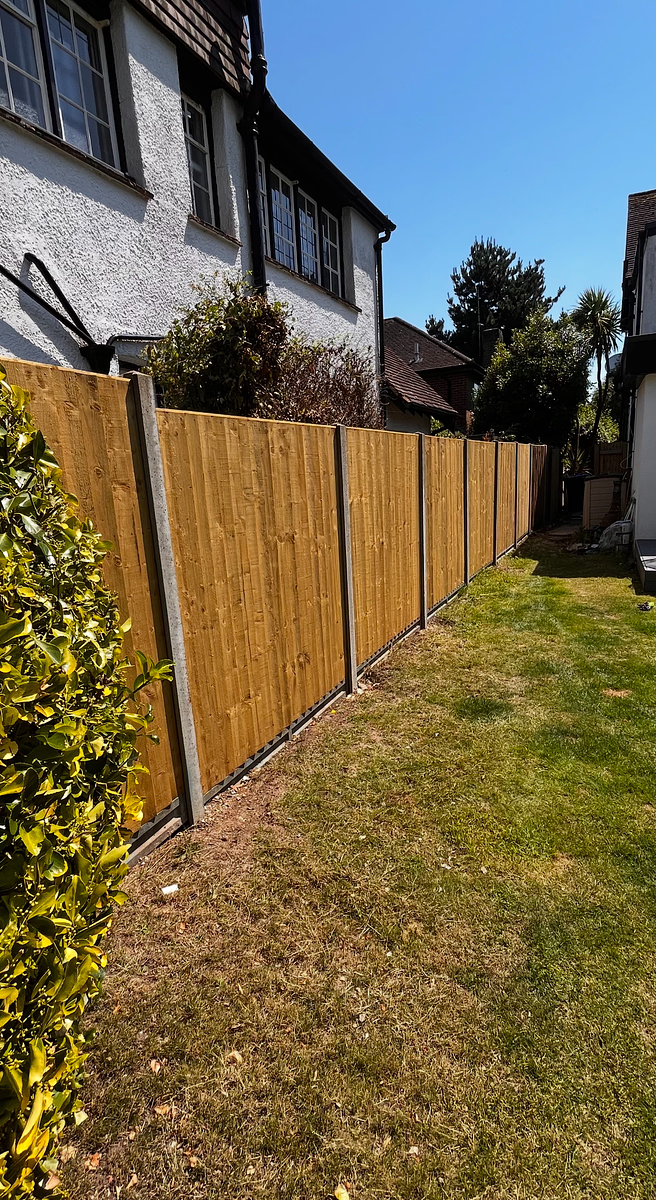
Choosing the Right Contractor for Fence Work
Whether repairing or replacing a fence, choosing qualified professionals ensures safe and durable results.
Homeowners in West Sussex often work with experienced fence contractors or a reputable fence company that offers both installation and repair services.
When evaluating contractors, consider the following:
- Experience with fencing services
Contractors familiar with local weather conditions can recommend durable materials and installation techniques. - Knowledge of garden fencing in west sussex requirements
Local professionals understand property boundary considerations and regional construction practices. - Ability to coordinate with landscaping work
If the fence forms part of a wider garden improvement project involving landscape contractors or landscape gardeners, coordination ensures consistent design. - Transparent pricing
Clear estimates help homeowners compare fencing repair costs against replacement options.
Conclusion
Garden fencing plays a key role in privacy, safety, and garden structure. When damage occurs, homeowners must decide whether repair or replacement is the best option.
Minor issues such as broken panels or loose posts can often be repaired quickly. However, older fences with widespread damage may benefit from full replacement.
By considering cost, lifespan, and future landscaping plans, homeowners in West Sussex can choose the solution that provides the most reliable and long-lasting result.