A long, thin garden can feel more like a corridor than a place to relax. The good news is that with the right long garden design, this shape can actually work in your favour. Careful planning, planting and zoning can turn a narrow strip of lawn into a series of interesting spaces that feel far bigger than the measurements suggest. Whether you are searching for long garden ideas, working out garden design for long narrow garden layouts, or simply want fresh long narrow garden ideas for the season ahead, this guide walks through practical, achievable ways to open up the space. At TH Fencing & Landscaping, we work with homeowners across the region to plan gardens that make the most of every metre, and the tips below reflect what actually works in real gardens, not just on paper.
Why Long Narrow Gardens Feel Smaller Than They Are
Most long, thin plots share the same problem. The eye travels straight down the garden in one uninterrupted line, which draws attention to the length and makes the width feel even more restricted. Fences running parallel on either side reinforce this tunnel effect, and a single lawn stretching from patio to back fence rarely helps.
Good long garden designs work by breaking that straight line of sight. Instead of showing the whole garden in one glance, the space is revealed gradually, section by section. This is the basic principle behind almost every successful long thin garden design, and it applies whether the plot is six metres wide or sixteen.
Zoning: The Foundation of a Long Narrow Garden Design
If you only take one idea from this article, make it zoning. A zoned garden divides the space into distinct areas, each with its own purpose and character. This might include a dining or seating area near the house, a lawn or play space in the middle, and a quieter planting area or workspace towards the back.
Zoning naturally answers one of the most common questions we hear: how to divide a long narrow garden without making it feel chopped up or cramped. The trick is to use changes in level, planting, or surface material rather than solid walls, so each zone flows into the next.
Practical Ways to Create Zones
- Use low hedging, trellis panels or open-framed screens to hint at a boundary without blocking it completely.
- Change the paving or ground material between areas, for example gravel near a seating zone and lawn beyond it.
- Introduce a slight change in level with a single step or raised bed line.
- Position a feature, such as a pergola or arch, as a natural transition point between sections.
Long Narrow Garden Ideas That Add Width Visually
Once the garden is divided into zones, the next step is making each section feel wider. There are several long narrow garden design techniques that consistently work well.
Plant across the garden, not along it. Borders that run in horizontal bands rather than long straight lines pull the eye left and right instead of straight down the plot. This is one of the simplest garden designs for long narrow gardens and can be done with existing borders in most cases.
Use diagonal lines in paving or lawn edges. A path or lawn edge set on a diagonal, rather than running parallel to the fences, makes the garden appear broader because it interrupts the straight parallel lines that create the tunnel effect.
Vary planting height. Taller shrubs and small trees positioned partway down the garden, rather than only at the boundaries, break up the view and add depth. This is a reliable answer for anyone looking for ideas for a long narrow garden that still feels natural rather than overly designed.
Soften the boundaries. Painting fences a muted, recessive colour and covering them with climbing plants helps the edges disappear rather than draw attention to how narrow the plot is.
A Long Narrow Border Planting Plan
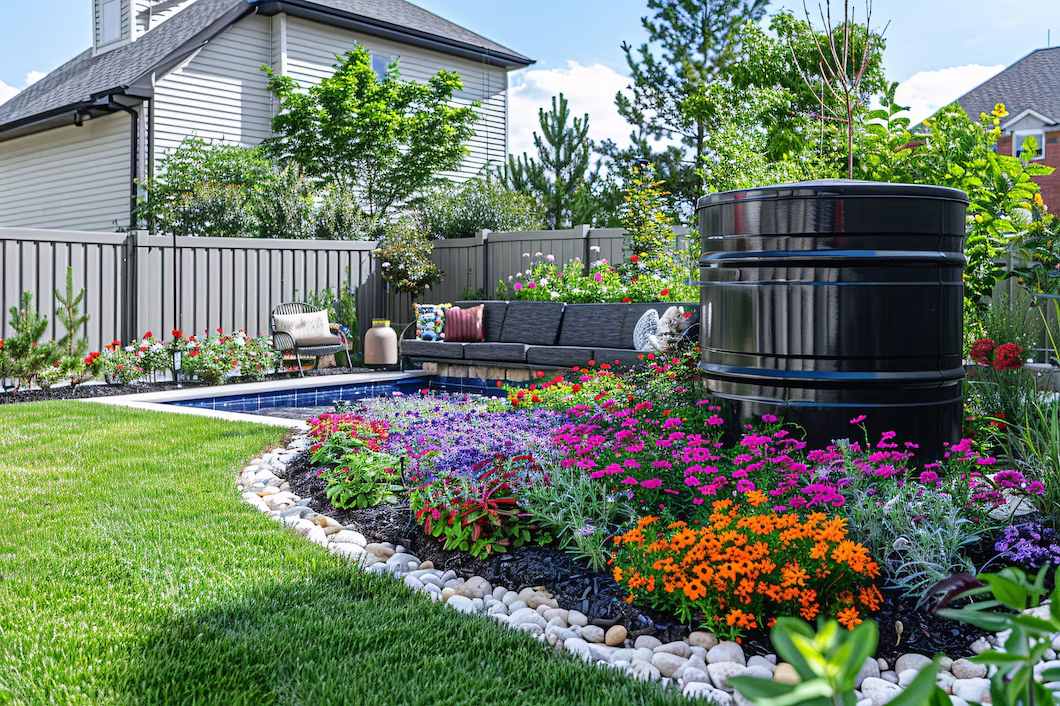
Planting is where a lot of the visual work happens. A well thought out long narrow border planting plan uses layers, repetition and colour to guide the eye and add texture without overwhelming the space.
| Border Zone | Suggested Approach | Effect |
|---|---|---|
| Near the House | Structured planting, evergreens, and decorative pots | Creates a defined, tidy start to the garden |
| Mid Garden | Mixed shrubs and perennials with varied heights | Breaks the straight sightline and adds visual interest |
| Boundary Edges | Climbers, ornamental grasses, and softer planting lines | Disguises the parallel fence lines and softens boundaries |
| Far End | Statement planting or a feature tree | Draws the eye and gives the garden a natural end point |
Repeating a small number of plant varieties along the length of the garden, rather than using something different in every bed, also helps. Repetition creates rhythm, which makes a long space feel considered and connected rather than stretched thin.

Garden Ideas for Long Narrow Gardens on a Budget
Not every change needs a full landscaping project. Several garden ideas long narrow homeowners often overlook are low cost and can be done gradually.
- Reposition existing pots and planters to break up straight lines.
- Add a simple trellis panel partway down the garden to suggest a zone change.
- Introduce a diagonal mowing pattern on the lawn to visually widen the space.
- Use mirrors carefully in a hidden seating area to add depth, taking care they are angled away from direct view.
These smaller ideas for a long thin garden can be a good starting point before committing to a larger redesign.
When to Bring in a Professional
Some changes, particularly those involving levels, drainage, structural planting or hard landscaping, are worth planning with a professional rather than trial and error. If you are unsure whether your garden actually needs a full rethink or just a few adjustments, it is worth reading our article on how to know when it is time to redesign your garden, which covers the signs that a garden has outgrown its current layout.
As an established landscape design company, TH Fencing & Landscaping has worked on long, narrow plots across the region, helping homeowners move from a rough idea to a finished garden that actually gets used. Good garden design starts with understanding how a space is lived in day to day, not just how it looks from an upstairs window.
Finding the Right Garden Designer
If you are searching for a garden designer West Sussex homeowners recommend, or comparing landscape designers near me, it helps to look for a team that offers a full service, from initial design through to planting and hard landscaping. A single point of contact for gardening design work tends to produce a more coherent result than piecing together several contractors.
TH Fencing & Landscaping provides garden design West Sussex residents can rely on for long narrow plots, courtyard gardens and larger family spaces alike. As a local landscape gardeners near me search often confirms, working with a nearby team also means better familiarity with local soil conditions, drainage and planning considerations.
Whether you need a full landscaping services West Sussex package or simply advice on planting and zoning, choosing a garden company near me with proven experience in awkward or narrow plots will save time and avoid costly changes later. For anyone comparing gardening and landscaping near me, it is worth asking to see previous projects involving long or narrow gardens specifically, since these require a different approach to a standard square or rectangular plot.
Bringing It All Together
A long, thin garden does not need to feel like a corridor. With thoughtful zoning, planting that works across the width rather than along the length, and a few well placed features to break up the view, even a narrow plot can feel spacious and inviting. The most effective long garden design projects combine several of these ideas together rather than relying on just one change.
If you would like advice tailored to your own garden, the team at TH Fencing & Landscaping is happy to talk through options and put together a plan suited to your space and budget.
If you are ready to explore what is possible for your own garden, Book a Quote with TH Fencing & Landscaping and our team will be in touch to discuss your space.